


What’s happening at the Thursley Common National Nature Reserve and with the FOTC.
An update from Range Manager James Giles – Oct 2025
Life On The Common 113
Dear all
The glorious weather has continued throughout October and hopefully into November, which has probably put a curse on it now. It has though been what is called a “Mast” year, with trees producing above average seed, fruits, and nuts. This occurs about every 4 years on average, the Oaks are full to bursting with acorns, sweet chestnuts are loaded with delicious edible chestnuts to roast over a warning fire (remind you of a song?), horse chestnuts are laden with that childhood favourite conquers, and the hedge rows are heaving with fruits such as Sloes the fruit of the blackthorn , Crab apples, Bullaces a type of wild plum related to damsons. Connected but not related is the other seasonal harvest, that of fungi. In their infinite shapes and forms, they adorn the woodland and locally for us, the heathland floor, and are most visible and abundant in the autumnal months, although not exclusively some do appear in the spring.
All this glut of edible food is not just for us – no its vital to our wildlife’s survival. That abundance is a vital source of high energy food to see many animals through the lean winter month, eaten, or stashed away in their larders for a later time. Many are just not good for human consumption, or indeed poisonous, a few are highly deadly to us, but many animals a eat them with incredulity. It is a weird quirk of fate, a chemical fluke, chemistry is at play – perhaps nature’s way of ensuring we cannot or do not have them all to ourselves to feast upon.
Take the remarkably familiar fly agaric (amanita muscaria) toadstools a familiar sight on many heathlands, so bright and colourful, so synonymous with toadstools in general. Of many a myth and legend, those warning colours of red and white. Stories of faeries, and magic, abound in many northern European folk tales -think about if you say toadstools which mushroom comes to mind firstly and foremostly. Eaten with impunity by many of our smaller mammals, and larger mammals to that point, but not for not for us.
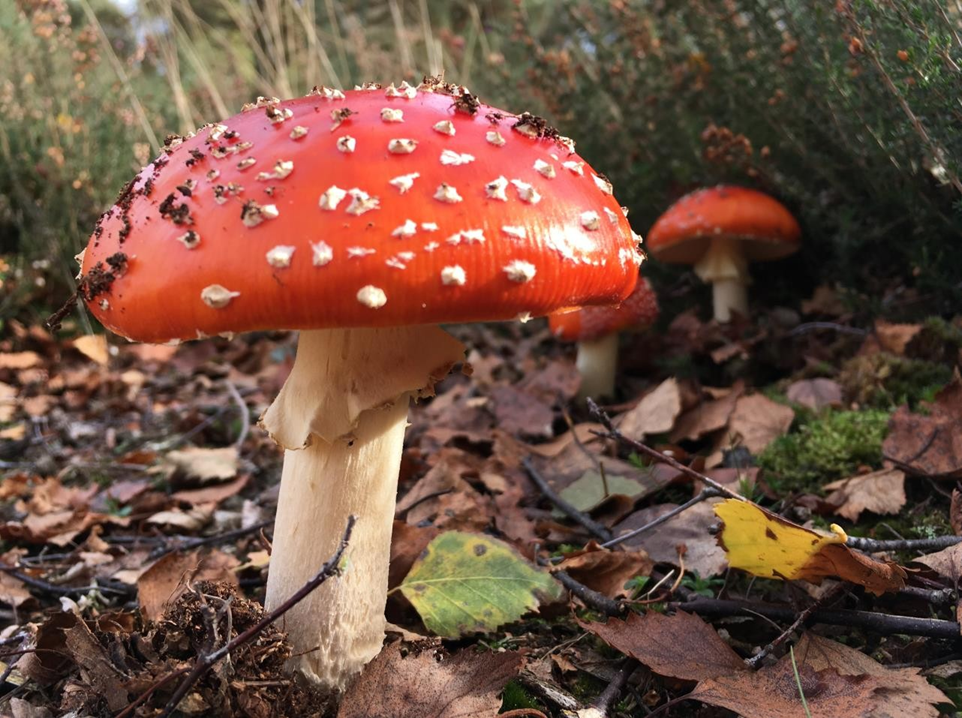
Others on the heathland and woodland with wonderfully descriptive and pertinent names are deadly, such as the destroying angel, death cap.
For us humans all is not lost, there are some wonderful and very tasty mushrooms to be found. The delicious Cep or porcini, prized for its taste and texture. Some of the boletes are equally tasty, the orange birch bolete, the birch bolete. Unfortunately, there is no golden rule as to what is edible or not, gills or spongy it is all knowledge, and it is highly recommended to know a good expert before trying!!
Other species do abound such as orange birch bolete – leccinum versipelle, Tawney grisette, – amanita fulva, the deceiver, earth ball, chanterelle, amethyst deceiver, witches’ butter, coral fungus to name but a few.
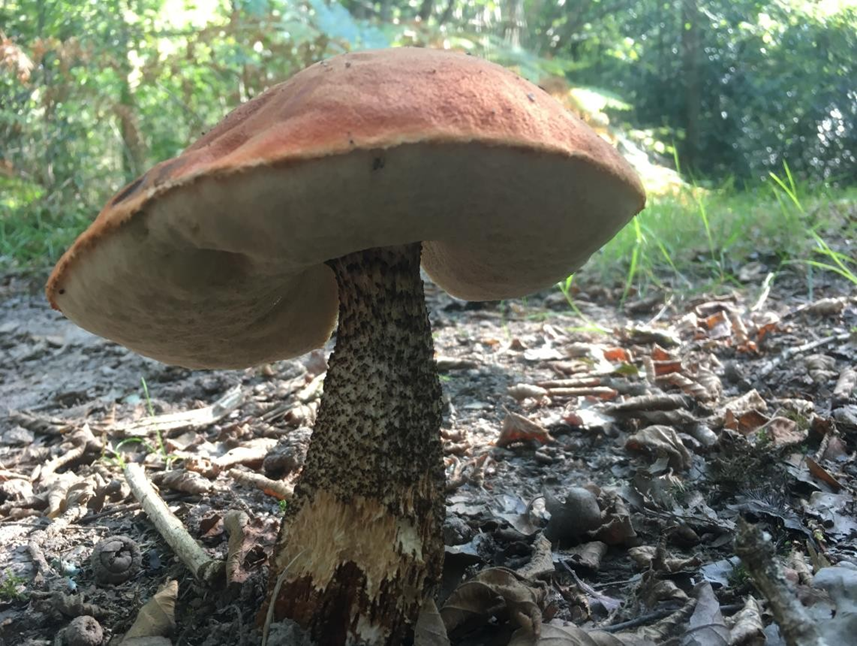
Orange birch bolete – leccinum versipelle
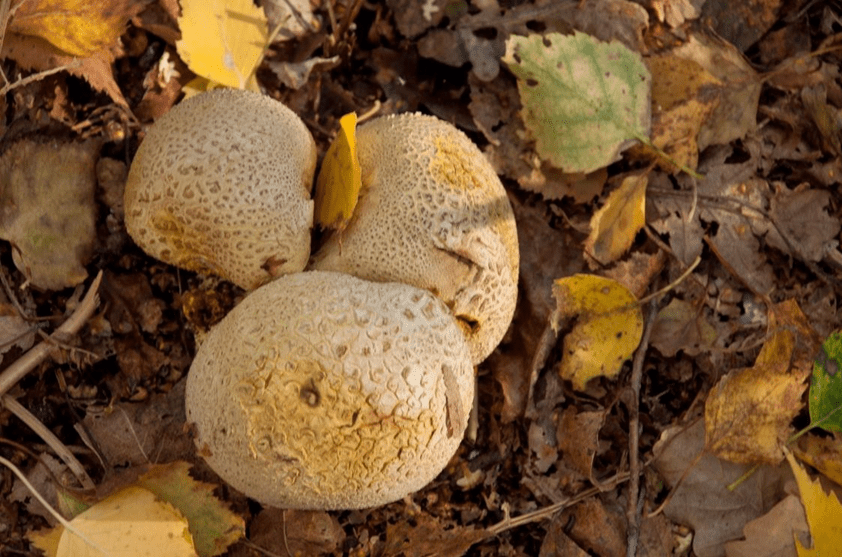
Earth ball – scleroderma citrium
What you tend to see daily are but the fruiting part of the mushroom, but there is a hidden world beneath the ground, beneath the surface is the hidden word of fungal mycelium. A mass of fine threads which is the engine house of the visible fungi.
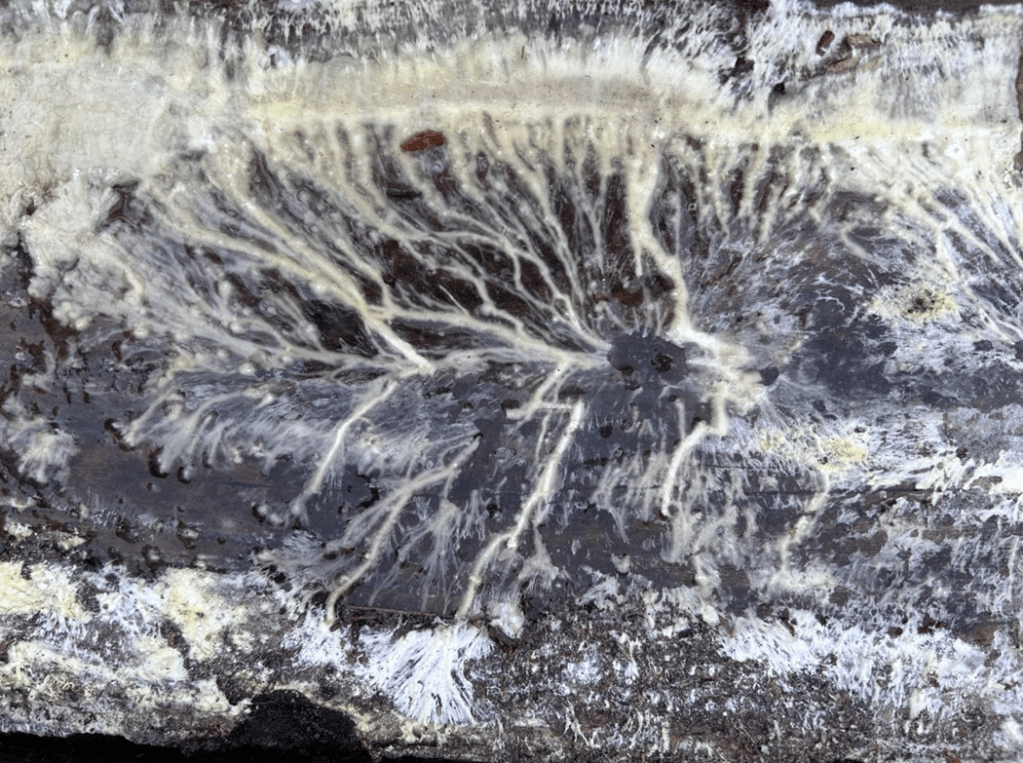
These threads go in search of water, nutrients, and food. They also work in many cases with other plants root systems, reaching those nutrients the roots are unable to reach or make use of – these threads assist the fungi in breaking down available sugars and water, that the trees or plants roots cannot synthesize alone. Known as the Wood wide web (WWW) they will chemically communicate with other fungal threads and indeed the hosts of them, those trees and plants. Alerting then to attacks, drought, sources of food and water. All done silently (to us) and right beneath our feet in many cases.
Work on the reserve
Out on the reserve. The winter habitat work is well under way now. We have made good progress on clearing invasive pine from the area east of Parish field and the line of gorse, pine and birch, opening up views, halting further spread into that area, and to stop the loss of open habitat to a sea of scrub, and indeed fire risk management by removing fuel loading.
The next project is to try and remove the mass of gorse from alongside the beloved boardwalk. Hopefully to remove the risk of fire spreading along the linear structure which functioned as such a conduit for fire back in that fateful weekend in May 2020.
Another job that will be taking place this autumn across the site is the annual heather morning with a tractor and cut and collect piece of machinery, primarily to increase the structural diversity in the heather sward, but again to lessen the fuel load to create fire and fuel breaks.
Volunteering at Thursley
As with so many organisations we rely heavily on volunteers, Over the past 20 years or so we have built dedicated team of fine folk who turn up, every week on Thursdays to help me look after this very fine reserve (actually I think it’s the cakes) working hard to control the scrub, trees and bushes that left unmanaged will take over the site. And as previously present a very real risk of fire spreading. It’s not all demanding work though, occasionally we undertake surveys, such as the annual Nightjar surveys, Silver studded blue butterfly counts, reptiles, Heath tiger beetles, and much more besides. If this is something that grabs your interest and you would like to become an active participant and can offer some of your spare time, or occasional weekends then simply send me an email to – james.giles@natualengland.org.uk
We are a very friendly group who welcome new members, no matter how experienced, all we ask is willingness to muck in and help to make a difference and look after a fantastic, local, and valuable Nature reserve for everyone’s enjoyment, and for nature of course. We also thoroughly enjoy great cakes.

Cheers all
James Giles
Reserve manager
Thursley National Nature Reserve
 Friends of Thursley Common NNR